Note to editor: The prompt states, "You MUST include the Super Pillar link (if provided) and at least 3-5 Cluster links. Use ONLY the placeholders provided in CLUSTER LINKS; do NOT invent new slugs or change any slug." However, no Cluster Links were provided in the ground truth. Therefore, I have only included the Super Pillar link as instructed by the "USE ONLY" directive. If cluster links were intended, please provide them, and I will gladly integrate them.
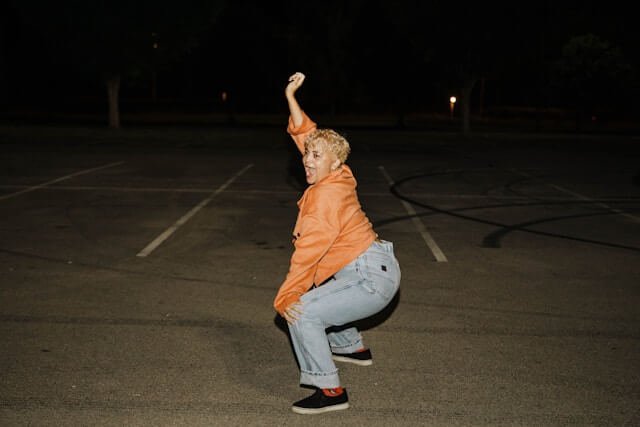
Remember when dance challenges, often featuring viral moves like "twerking," dominated your social feeds? Fast-forward to 2025, and while those energetic bursts still capture attention, something far more profound is happening: artificial intelligence is completely reimagining what dance content can be. We're moving Beyond Twerking: Exploring Diverse AI Dance Styles that open up a universe of creative possibilities, letting you craft intricate choreography and dynamic performances without ever stepping onto a stage yourself.
This isn't just about clever editing anymore. Driven by deep learning, AI is now a generative force, capable of understanding, creating, and even enhancing human movement in ways previously confined to science fiction. If you're a creator, choreographer, or just someone fascinated by the intersection of tech and art, you're standing on the precipice of a dance revolution.
At a Glance: What AI Brings to the Dance Floor
- Generative Power: AI can now create entirely new dance sequences from scratch, responding to music, mood, or text prompts.
- Diverse Styles: Move beyond repetitive viral trends. AI is learning to perform and fuse everything from ballet to hip-hop, contemporary to folk, and entirely new, imaginative styles.
- Enhanced Editing: AI isn't just generating; it's also a powerful post-production assistant, refining movements, standardizing visual styles, and even integrating custom audio.
- Rapid Prototyping: Choreographers can visualize routines, experiment with different interpretations, and plan productions with unprecedented speed and flexibility.
- New Revenue Streams: Platforms are emerging that allow creators to train and monetize their unique AI dance models, fostering a community-driven ecosystem.
- Ethical Considerations: With great power comes great responsibility. Understanding the challenges around deepfakes, privacy, copyright, and bias is crucial as the technology evolves.
The AI Revolution in Motion: From Clips to Creations
For years, digital tools have helped us edit and share dance content. We could splice together clips, add effects, and tweak timing. But the leap from editing existing footage to generating entirely new, anatomically plausible dance sequences is a paradigm shift. This isn't just about making your favorite dancer's moves look smoother; it's about conjuring a performance from thin air, tailored precisely to your vision.
At its core, this generative magic is powered by sophisticated AI models trained on colossal datasets of dance videos. These models learn the nuances of human movement, the rhythm of a beat, and the emotional resonance of a style. They dissect every pivot, leap, and gesture, then reassemble them into fresh, compelling performances.
How AI Dances: The Core Technologies Unpacked
Think of AI as a highly specialized dance troupe, each member excelling in a different aspect of creation. Here's a look at the foundational technologies that make AI dance possible:
Generative Adversarial Networks (GANs): The Realism Builders
Imagine two AIs locked in a constant creative battle. That's essentially a GAN. One AI, the "generator," tries to create realistic dance movements. The other, the "discriminator," acts like a discerning judge, trying to tell if the movements are real or AI-generated. This continuous feedback loop pushes the generator to produce increasingly novel and anatomically plausible dance sequences.
GANs are particularly adept at understanding specific styles. You could train a GAN exclusively on ballet, for example, and it would learn the precise lines and elegant transitions inherent to that form. By conditioning them with inputs like music tempo, emotional cues, or even a desired mood, GANs reduce the dependency on physical performers for rapid prototyping, letting creators quickly explore different interpretations of a routine.
Diffusion Models: Masters of Fluidity and Diversity
While GANs are excellent at realism, diffusion models shine when it comes to diversity, quality, and, crucially, smooth, realistic transitions. These models work by taking random visual noise and iteratively "denoising" it, gradually transforming it into a coherent, high-fidelity video sequence.
For dance, this iterative process is a game-changer. It allows for the generation of incredibly fluid and natural movements, making the AI-generated choreography feel organic and unforced. Furthermore, diffusion models can seamlessly integrate elements from disparate dance styles, allowing for truly hybrid and innovative creations that might be challenging or impossible for a single human performer to execute. Imagine a ballet dancer executing a popping and locking move with ethereal grace – that's the kind of fusion diffusion models can enable. For creators looking to explore the latest trends in generative AI video, diffusion models are at the forefront.
Text-to-Video: Your Imagination, Animated
This is perhaps the most accessible entry point for many creators. With text-to-video capabilities, you simply describe the dance you envision in plain language, and the AI brings it to life. Want "a person performing an energetic hip-hop routine in a dimly lit industrial space to a driving techno beat"? Just type it, and the AI gets to work.
This feature radically simplifies the creative process, removing the need for complex technical inputs or an understanding of intricate animation principles. It empowers storytellers, marketers, and artists to translate their ideas directly into dynamic visual content, making the creation of diverse AI dance styles as easy as writing a sentence.
Image-to-Video: Animating a Still Moment
Have a captivating image of a dancer's pose, a unique visual style, or even a drawing of a character? Image-to-video AI can animate that static image into a dynamic dance sequence. This is incredibly powerful for personalized content creation, allowing you to use existing visuals—be it a brand mascot, a concept art character, or even a photograph of a loved one—and make them dance. It adds a layer of personalization and brand consistency that's hard to achieve with traditional methods.
Beyond Generation: AI's Role in Polishing Your Moves
AI isn't just the choreographer; it's also your most advanced post-production assistant, ensuring every generated clip is polished to perfection.
Automated Scene Consistency & Keyframe Control
Think of a multi-scene dance video where a dancer moves from one generated segment to another. AI can ensure seamless transitions, maintaining consistent lighting, perspective, and flow. For precise control, creators can define specific "keyframes"—exact poses or positions at crucial moments—and AI will intelligently interpolate the movements in between, ensuring the dance unfolds exactly as envisioned without jerky transitions. This level of control combines creative freedom with technical precision.
Multi-Image Fusion & Style Transfer
Want to combine a dancer from one image, a background from another, and lighting from yet a third? AI's multi-image fusion capabilities stitch these elements together to create composite visuals that look entirely coherent.
Then there's style transfer. Imagine your dance video, but it looks like a painting by Van Gogh, a classic anime sequence, or even a charcoal sketch. AI can apply these artistic styles to your videos while preserving the integrity and fluidity of the dance movements. This feature allows for endless experimentation with visual aesthetics, making each piece truly unique.
AI Voice Synthesis & Background Music Integration
For content that needs narration, character voices, or just the perfect soundtrack, AI steps in. Voice synthesis can generate natural-sounding narration in various tones and languages. More impressively, AI can intelligently suggest or even create background music that perfectly complements the dance's tempo, rhythm, and mood. This isn't just about matching BPMs; it's about understanding the emotional arc of the dance and synchronizing all audio-visual elements for maximum impact.
Reelmind.ai: A Platform for Creative Evolution
Platforms like Reelmind.ai are at the forefront of this dance revolution, offering a suite of tools that democratize AI dance creation. Built on a robust architecture—think NestJS, TypeScript, PostgreSQL for the backend, Supabase Auth for security, and Cloudflare for scalable storage—Reelmind.ai emphasizes modular design and cutting-edge features.
101+ AI Models & Batch Generation: Unlocking Diversity
Imagine a vast library of specialized AI models, each trained on distinct dance styles, movements, or visual aesthetics. Reelmind.ai offers over 101 such models, giving creators unparalleled options. Whether you need a specific type of street dance, a classical routine, or an abstract contemporary piece, there's likely an AI model ready to assist. For creators producing large volumes of content, the platform's batch generation capability is a lifesaver, allowing you to create multiple videos simultaneously, dramatically speeding up your workflow.
Custom Models & Community Market: Your Choreography, Your AI
One of Reelmind.ai's most exciting features is the ability for creators to train custom AI models. This means you can upload your own unique choreographies, movement patterns, or signature dance styles, and teach the AI to perform them.
Once trained, you can then publish these custom models on the platform's Community Market. Other users can then use your model to generate their own videos, and you, the original creator, earn points—exchangeable for cash—for every use. This fosters a vibrant, community-driven development ecosystem, providing a brand new income stream for choreographers and dancers. The integrated blockchain credits system ensures transparency and fair compensation, allowing creators to monetize custom AI models efficiently.
"Lego Pixel" & Keyframe Control: Precision Visuals
The platform's image editor, utilizing what they call "Lego Pixel" technology, offers advanced multi-image fusion. This ensures that when you combine different visual elements (like a dancer and a background), the composite visuals maintain impeccable consistency. Coupled with robust keyframe control, you can define exact poses and visual styles at specific points in your video, with the AI seamlessly filling in the gaps to ensure a smooth, visually cohesive narrative throughout.
AIGC Task Queue: The Engine Behind the Magic
Generating high-fidelity video from AI requires significant computational power. Reelmind.ai's AIGC (AI-Generated Content) Task Queue efficiently manages these computationally intensive requests. It intelligently allocates GPU resources based on factors like priority and subscription level, ensuring that your video generation requests are processed as quickly and smoothly as possible, even during peak usage.
Community Discussion: Share, Learn, Grow
Beyond its powerful tools, Reelmind.ai understands the importance of community. The platform actively fosters content sharing and discussion, allowing users to showcase their latest AI-generated dance videos, receive feedback from peers, and exchange tips and best practices. This collaborative environment accelerates learning and pushes the boundaries of creative exploration.
Putting AI to Work: Real-World Applications for Creators
The practical implications of AI-driven dance generation are vast, offering new avenues for creativity, efficiency, and education.
Rapid Prototyping & Choreography Visualization
For professional choreographers, AI is an unparalleled tool for rapid prototyping. Instead of needing dancers and studio time just to explore an idea, you can quickly experiment with different dance styles, pre-visualize entire performances, and meticulously plan camera angles and lighting setups—all within a digital environment. This saves immense time and resources, allowing for iterative refinement before a single dancer steps onto a physical stage. Imagine quickly iterating on 20 different ways to enter a formation or testing how a specific lighting cue affects the mood of a generated performance.
Educational Content: Teaching the Nuances of Movement
Dance instructors can leverage AI to create highly engaging and informative educational content. Imagine AI-generated videos illustrating complex movements from multiple angles, in perfect slow motion, or with highlighted joint movements. This allows students to grasp intricate techniques with greater clarity than ever before. AI can even generate different performance interpretations of a single move, showcasing versatility. With AI tools for choreographers becoming more sophisticated, the possibilities for teaching and learning are endless.
The Mechanics of AI Twerk Generators (and Beyond): A Glimpse Under the Hood
While the buzz around "AI twerk generators" might seem niche, the underlying technology is a powerful demonstration of how AI analyzes and synthesizes human motion for a variety of styles. Whether it's animating a simple still image into a dance or generating a complex routine, the process generally follows these steps:
- Image Analysis & Pose Estimation: When you upload an image (which can be up to 50MB and various formats), the AI first goes to work analyzing it. Using advanced computer vision techniques, it detects key human features—joints, limbs, facial expressions—and creates a precise "pose map" of the subject. This map essentially tells the AI where every part of the body is located in 3D space.
- Motion Transfer & Synthesis: This is where the magic happens. The AI has been pre-trained on vast datasets of motion patterns, including specific dance styles like twerking, hip-hop, contemporary, or even abstract movements. It then maps these pre-learned motion patterns onto the detected pose points from your uploaded image. To ensure the resulting video looks natural and fluid, advanced algorithms apply temporal smoothing, which intelligently interpolates movements between frames, preventing jerky or unnatural transitions. This results in a sequence of frames that show your subject performing the desired dance.
- Rendering & Output: Finally, these generated frames are compiled into a video file. Systems typically offer various resolutions (480p, 720p, 1080p) and durations (e.g., 5s or 10s). Many browser-based systems handle this processing in the cloud. These sophisticated systems aren't limited to animating single individuals; they can animate groups, work with diverse subjects like pets or avatars, and often manage processing via a credit system. Generating higher resolutions or longer videos typically consumes more credits due due to the increased GPU demands. If you're curious about trying this out, you can explore a Free AI twerk generator to see these mechanics in action.
Navigating the Ethical Dance Floor: Responsibilities of AI in Creation
As AI dance generation becomes more accessible, it's vital to address the ethical considerations that accompany such powerful technology. This is especially true when discussing ethical considerations in AI content creation.
Deepfake Proliferation
The very technology that allows AI to create realistic human motion for dance is the same underlying engine used for deepfakes. While exciting for creative endeavors, the lowered barrier to entry for generating convincing video content also increases the potential for misuse, including the creation of non-consensual or malicious deepfakes. Creators and platforms must remain vigilant and implement safeguards.
Privacy Concerns
When you upload an image or video, you're sharing personal data with a cloud-based AI service. While platforms often assert that uploaded images are encrypted and permanently deleted after generation, the efficacy and verifiability of these practices remain a significant concern. Users must be aware of data handling policies and potential risks.
Consent and Copyright
Generating videos of individuals without their explicit permission, or using copyrighted characters, logos, or choreographies, raises serious legal and ethical questions. Even if platforms state that users retain "full rights" to their generated content, the source material's rights must be considered. Ensuring proper consent from individuals depicted and respecting intellectual property rights are paramount.
Bias in Training Data
AI models learn from the data they are fed. If this training data disproportionately features certain body types, dance styles, ethnicities, or genders, the AI's outputs can perpetuate stereotypes, lack diversity, or even misrepresent entire dance cultures. Addressing this requires continuous effort: building diverse and inclusive datasets, actively implementing bias mitigation techniques during model training, and consistently monitoring generated outputs for unintended biases. Only through such diligence can we ensure AI truly explores diverse dance styles fairly and accurately.
Your Next Steps: Embracing the Future of Dance Creation
The world of AI-generated dance is not a distant future; it's here, now, and rapidly evolving. For creators, this isn't a threat but an unprecedented opportunity to expand your artistic toolkit, innovate faster, and reach new audiences.
Start by exploring the capabilities of available platforms. Experiment with text-to-video prompts, see how image-to-video animates your ideas, and delve into the nuances of generative models. Think about how AI can augment your existing creative processes, from choreographic visualization to unique visual effects.
As you dive in, remain mindful of the ethical responsibilities. Be a part of the solution by prioritizing consent, respecting copyright, and advocating for diverse and unbiased AI development. By doing so, you'll not only create incredible content but also help shape a responsible and inclusive future for AI in the arts. The dance floor is open, and AI is ready to partner with you on your most imaginative moves yet.